

The Scavenger Hunt
9 small scavenging tasks

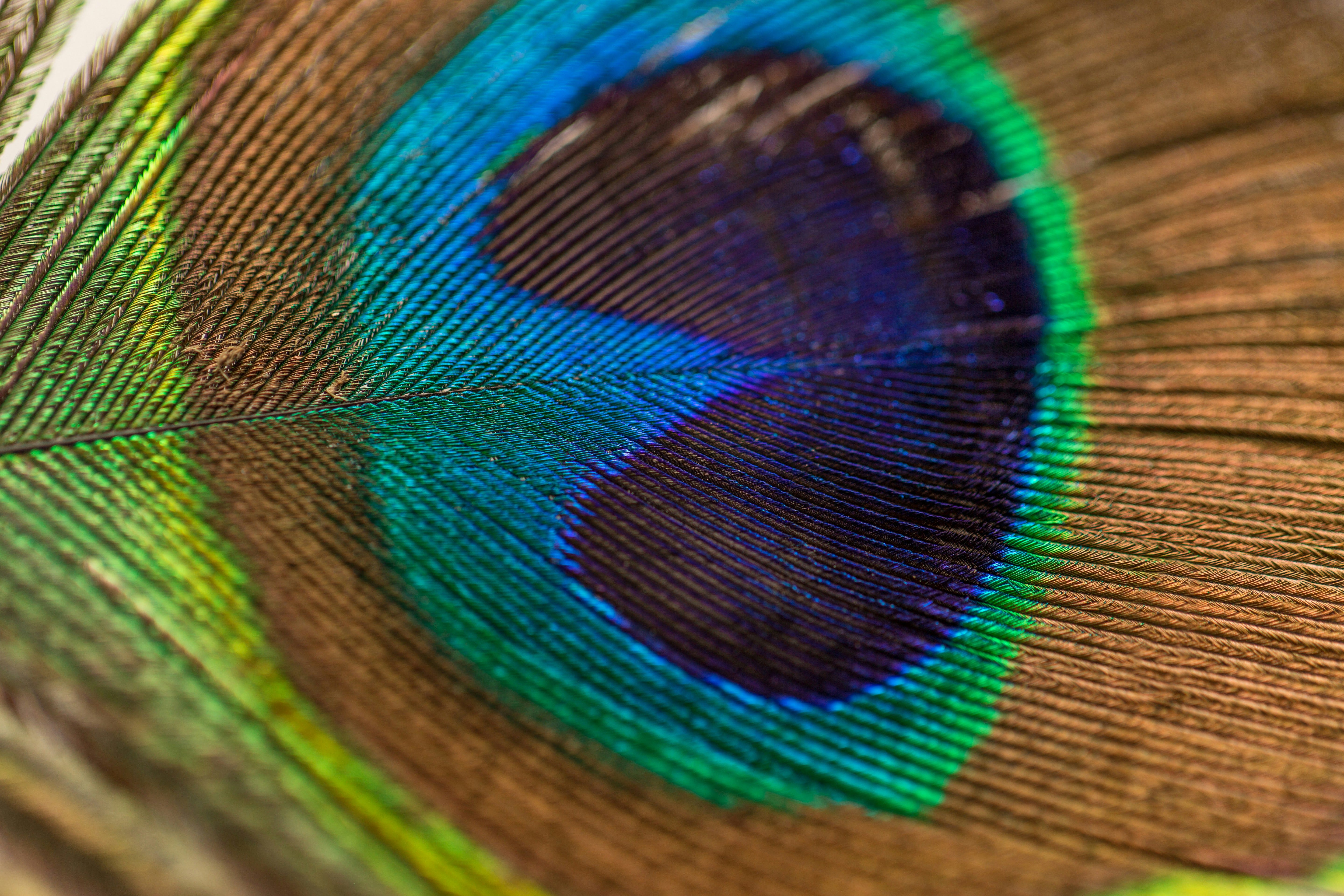
Photo by Amber Flowers on Unsplash
I used to love a scavenger hunt when I was small. Being a competitive child, I remember not being able to find the peacock train feather and thinking how unfair it was, and that the "organisers are the problem—surely you need a nearby peacock to find a peacock feather?"
Welcome to "The Scavenger Hunt," an exercise in poetic discovery and transformation. Here, you'll have all the tools you need—there will be no unobtainable peacock plumes, and you have the agency to complete as many or as few tasks as you wish, and indeed, you can add some.
Creating poetry often involves attuning one’s ear to what is valuable, which can differ from popular opinion. When finely tuned, you can hear poetry in the world, in fragments of conversation, and in everyday occurrences. The exercise lies in recognising the poetic in these fragments and fusing them with other ideas to make them our own.
We'll start by exploring our own bodily sensations, writing morning and evening poems inspired by the question, "How does your body feel right now?" This introspective practice grounds us in the present and sets the stage for deeper exploration.
Next, we'll extract wisdom from philosophers like Hannah Arendt, Ludwig Wittgenstein, Maurice Merleau-Ponty, Henry David Thoreau, and Immanuel Kant. By reinterpreting and rearranging their words, we'll create new, fresh and thought-provoking fragments.
We'll also gather snippets from emails, news headlines, text messages, and everyday observations. By paying close attention to our surroundings—listening to conversations, noting the details of our environment, and capturing the essence of spontaneous moments—we'll compile a diverse collection of phrases and impressions.
Through this process, we'll learn to tune our ears to the poetry hidden in the mundane. By rearranging and fusing these fragments, we'll craft poetry that is both reflective and resonant, capturing the complexity of our experiences and the world around us.
At the end of this post, I have shared my draft and a refined version of my own scavenger piece, along with an exegesis of my creative process, in case that is useful to see!
Task 1:
Read the morning and afternoon poems on Jacket2’s “How does your body feel right now?” (scroll down). Write your own body poem. At least three lines. Remember to repeat this again at the end of the day.
Task 2: Choose a quote from each of the philosophers below. Take a fragment and translate/ rearrange it, making it strange, use it as a departure point. Write down your new version.
Hannah Arendt
We are free to change the world and start something new in it.
This is the precept by which I have lived: Prepare for the worst; expect the best; and take what comes.
Storytelling reveals meaning without committing the error of defining it.
This inability to think created the possibility for many ordinary men to commit evil deeds on a gigantic scale, the like of which had never been seen before. The manifestation of the wind of thought is not knowledge but the ability to tell right from wrong, beautiful from ugly. And I hope that thinking gives people the strength to prevent catastrophes in these rare moments when the chips are down.
Ludwig Wittgenstein:
I don't know why we are here, but I'm pretty sure that it is not in order to enjoy ourselves.
Whereof one cannot speak, thereof one must be silent.
Hell isn't other people. Hell is yourself.
The real question of life after death isn't whether or not it exists, but even if it does what problem this really solves.
The limits of my language means the limits of my world.
The body is our general medium for having a world.
Maurice Merleau-Ponty:
We know not through our intellect but through our experience.
The world is... the natural setting of, and field for, all my thoughts and all my explicit perceptions. Truth does not inhabit only the inner man, or more accurately, there is no inner man, man is in the world, and only in the world does he know himself.
As a matter of principle, humanity is precarious: each person can only believe what he recognizes to be true internally and, at the same time, nobody thinks or makes up his mind without already being caught up in certain relationships with others, which leads him to opt for a particular set of opinions.
Everyone is alone and yet nobody can do without other people, not just because they are useful (which is not in dispute here) but also when it comes to happiness.
Henry David Thoreau
It's not what you look at that matters, it's what you see.
Rather than love, than money, than fame, give me truth.
This world is but a canvas to our imagination.
Our life is frittered away by detail... simplify, simplify
Success usually comes to those who are too busy to be looking for it.
There are a thousand hacking at the branches of evil to one who is striking at the root.
Not until we are lost do we begin to understand ourselves.
Make the most of your regrets; never smother your sorrow, but tend and cherish it till it comes to have a separate and integral interest.
To regret deeply is to live afresh.
Goodness is the only investment that never fails.
Never look back unless you are planning to go that way.
Heaven is under our feet as well as over our heads.
What lies behind us and what lies ahead of us are tiny matters compared to what lives within us.
Immanuel Kant
Experience without theory is blind, but theory without experience is mere intellectual play.
Two things awe me most, the starry sky above me and the moral law within me.
Science is organized knowledge. Wisdom is organized life.
In law a man is guilty when he violates the rights of others. In ethics he is guilty if he only thinks of doing so.
Morality is not the doctrine of how we may make ourselves happy, but how we may make ourselves worthy of happiness.
Happiness is not an ideal of reason, but of imagination. Immanuel Kant Thoughts without content are empty, intuitions without concepts are blind.
It is beyond a doubt that all our knowledge begins with experience.
I had therefore to remove knowledge, in order to make room for belief.
Task 3: Find a fragment of text from an email and write it down.
Task 4:

Photo by AbsolutVision on Unsplash
Find a news headline or fragment from the news and write it down.
Task 5: Find your favourite (or most imaginative) person in your text messages (or apps) and look at your thread. Steal a fragment from you/them. Write it down.
Task 6: Go outside. Spend just 5 minutes. Really look at the ground, the building, the people. Listen and look very closely at how nature is operating and growing despite the architecture. Look at the signs up high, (and steal text) the brick work, the birds, the types of trees, any ambient noise, the sounds and smells you encounter, anything surprising, jot down thoughts, impressions, anything about a person or two (or a crowd) who passes you by. Write down all thoughts.
Task 7: Go into a café/shop and listen to someone’s conversation -steal a snippet to write down.
Task 8: At some point, arbitrarily map the time- day- season- month year (play with the formality of this).
Task 9:
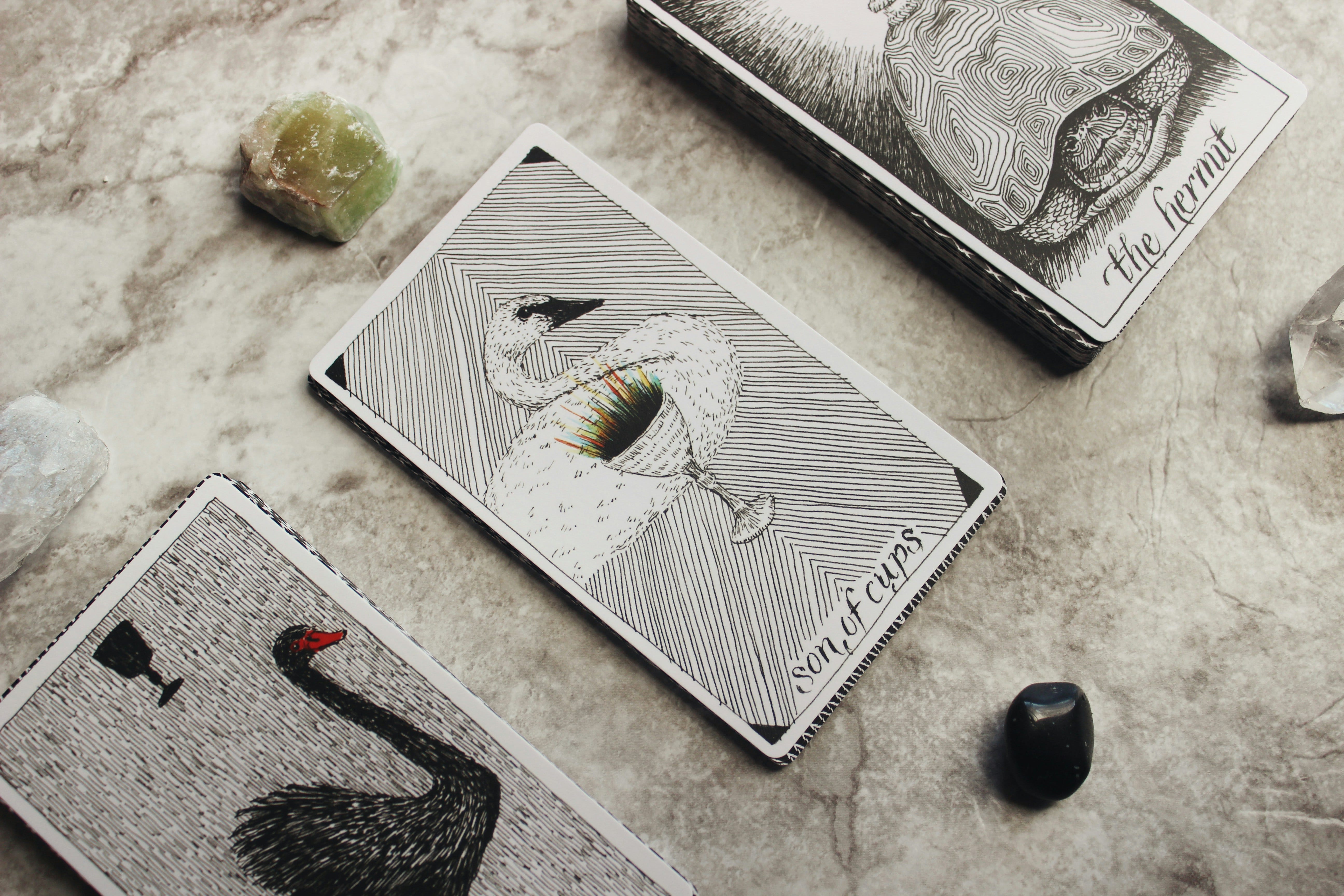
Photo by Jen Theodore on Unsplash
Insert your tarot/horoscope for the day (unless this is offensive to you, then please don’t!)
Remember to repeat this exercise later in the day “How does your body feel right now?”
When writing up:

Photo by Nathalia Segato on Unsplash
By now, you have collected a strange collection of phrases and fragments. Because poetry is all about the “best words in the best order” rearrange them and switch up the chronology to suit you best. What happens if you start with the tarot? Does it lend the rest of the writing a particular frisson or theme? It will no doubt inflect the work to start and end with the body poem. Putting the date (or location) upfront will give a particular context to the generated work. But perhaps you’d prefer the date to come in arbitrarily mid-poem. Is there anything you have written that could become a refrain? Can you invent new iterations of it?
Okay, here is my draft of my scavenger piece (you’ll notice I did NOT follow all my own rules)- that’s okay, remember subvert subvert! And below this draft is the next version:
We are obliged to start something new that will change the world.
This jangling & insistent body which makes us my world.
That which is a general means of carrying round tissue.
You're so good at detecting and jollying
What we know about outage
Softboi alarms I’m getting softboi klaxons
You’ve got to think, you’ve got short sleeves on, so what should you do.
The moss grows out of the concrete- “life finds a way”
the birch looms & sways & the old man’s bush is stoic
the slugs are out of control
It’s 11.02am, in the height of summer & no one else is awake yet
Expect the unexpected, in fact don't even expect that much.
Today could be a wild ride, being aloof and thus failing to see an approaching problem
a small misstep can sometimes cause problems that are way out of proportion to the cause.
The next version:
It’s 11.02am & no one else is awake.
I feel obliged to start something that affects
the perimeters of this jangling &
insistent body which makes up my world.
Yes, to the body, the light touches of which
cannot be contained by looming & swaying
& in that knowledge, I’ve become expert
at detecting alarms & outage. You’ve got to think,
expect the unexpected, but don't expect
too much. Being aloof is a wild ride,
way out of proportion to the cause.
A little exegesis on my process/ decisions:
In the second version of my poem, I focused on enhancing thematic coherence and tone. I removed extraneous elements that did not directly contribute to the central theme, such as the playful "softboi klaxon." While I was sad to lose it, its removal helped maintain a contemplative and serious tone. This sacrifice strengthened the thematic focus, despite losing some playful language.
I integrated the email phrase "You're so good at detecting and jollying" with the headline "What we know about outage" (originally about a Microsoft outage) and retained the “alarms” from "Softboi alarms." This evolved into “I’ve become expert at detecting alarms & outage,” with the pronoun change emphasising personal ownership of this expertise. The alarms and detecting, now unlinked from their original sources, symbolise my ability to sense danger within the body.
The final poem retains key imagery such as the "jangling & insistent body" and “looming & swaying,” now abstracted from the birch tree, to evoke the sensory experience of an unstable body. Removing less relevant images like "the moss grows out of the concrete" and “the slugs are out of control” prevents distraction, improving the poem's pacing.
Editing “It’s 11.02am, in the height of summer & no one else is awake yet” to “It’s 11.02am & no one else is awake” improves rhythm and removes the dull detail of the season. Potentially a month or season could go in there, but I quite like the lack of detail, which adds mystery, why is no-one else awake so late? p.s. they are still not awake and it is 12.15pm now…
The Tarot line “expect the unexpected, but don't expect too much” are more direct and impactful without the unnecessary “in fact, don’t even.” Similarly, the line “Being aloof is a wild ride, way out of proportion to the cause” is a more concise version of “Today could be a wild ride, being aloof and thus failing to see an approaching problem / a small misstep can sometimes cause problems that are way out of proportion to the cause.” This edit removes redundancies and clarifies the core idea: aloofness can lead to unexpected and disproportionate consequences. The original longer version, while descriptive, had elements that could detract from the sharpness of the message.
The poem I generated doesn’t read like a scavenger hunt poem I don’t think as I’ve tried to attempt to make the ideas chime.
N.b. Remember when using exercises that writing is more sophisticated when you can no longer see the exercise behind the work. Simply use writing exercises to generate material that serves your purposes.
Hope you found something to enjoy here! Go scavenge!